Do it right, or don't do it
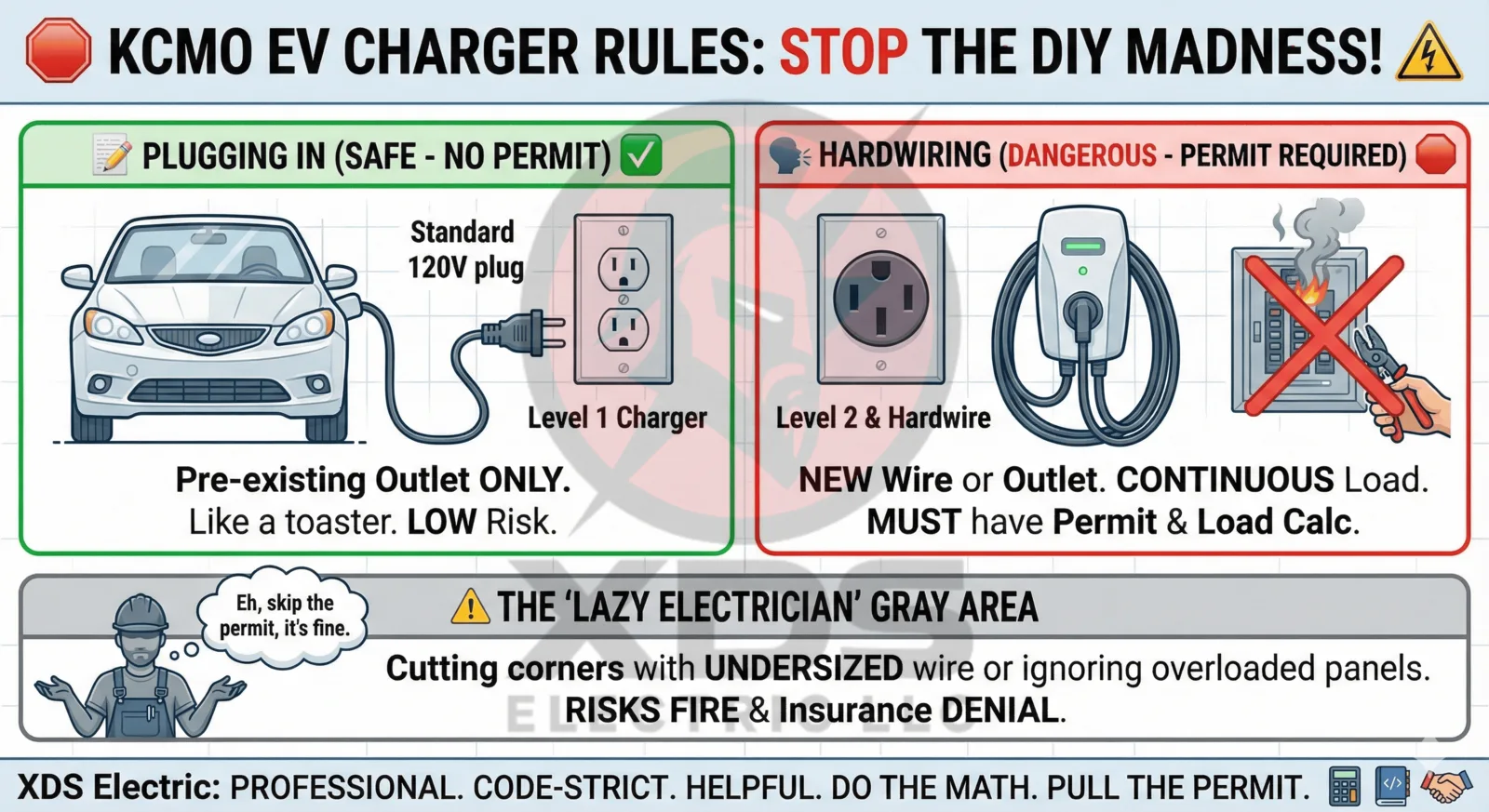
A home EV charger should fit both the vehicle and the electrical system supplying it. The goal is dependable charging—not simply finding an empty breaker space.
Start With the Existing Electrical System
Before adding a charging circuit, have a qualified electrician evaluate the service, panel, existing loads, and proposed charging equipment. A service rating and a charger rating alone do not establish whether an installation is suitable. The assessment may identify a suitable charging rate, an approved load-management approach, or work needed before installation.
Confirm Permits Before Work Starts
Kansas City, Missouri, says permits are needed before most electrical work begins. Adding a circuit, installing a receptacle, or hardwiring charging equipment is different from plugging approved equipment into an existing suitable outlet. Confirm the requirements for the actual work with the jurisdiction responsible for the property.
Do not assume a rule for Kansas City, Missouri, also applies in Kansas City, Kansas, Overland Park, or another nearby community. Follow the locally adopted code, amendments, and inspection requirements. Keep the permit and inspection records with your project documents.
Source: Kansas City, Missouri — electrical permits.
Match the Installation to the Equipment
EV charging can place a sustained demand on a circuit. The electrician must select the conductors, overcurrent protection, wiring method, connections, and any required disconnect or ground-fault protection for the equipment and installation conditions. Follow the manufacturer's instructions and the applicable code—not a one-size-fits-all internet diagram.
Whether a separate disconnect is required cannot be decided solely by whether the panel is visible from the charger. Equipment ratings, installation details, the adopted code edition, and local requirements matter.
Questions Worth Asking
- Has the existing electrical capacity been evaluated for this charger?
- Who is responsible for the permit and required inspections?
- What equipment and charging rate are included in the proposal?
- What happens if the inspection identifies additional work?
At XDS Electric, we want the scope and requirements understood before installation. Contact us about your EV charging project, or review our EV charger installation service.
General planning information, not installation instructions. Requirements vary by jurisdiction and equipment. Do it right, or don't do it.
Share This Article
Was this article helpful?
How did you like this article?
3 reactions so far