The Quiet Guardian: Why Homeowners Are Turning to Whole-House Surge Protection
Most of the electrical damage in a modern home doesn't arrive with a dramatic lightning bolt. It builds quietly, over months and years, in tiny bursts you never see or hear. That slow erosion is exactly why more Kansas City homeowners are installing a device that works silently in the background: whole-house surge protection.
What a Whole-House Surge Protector Actually Does
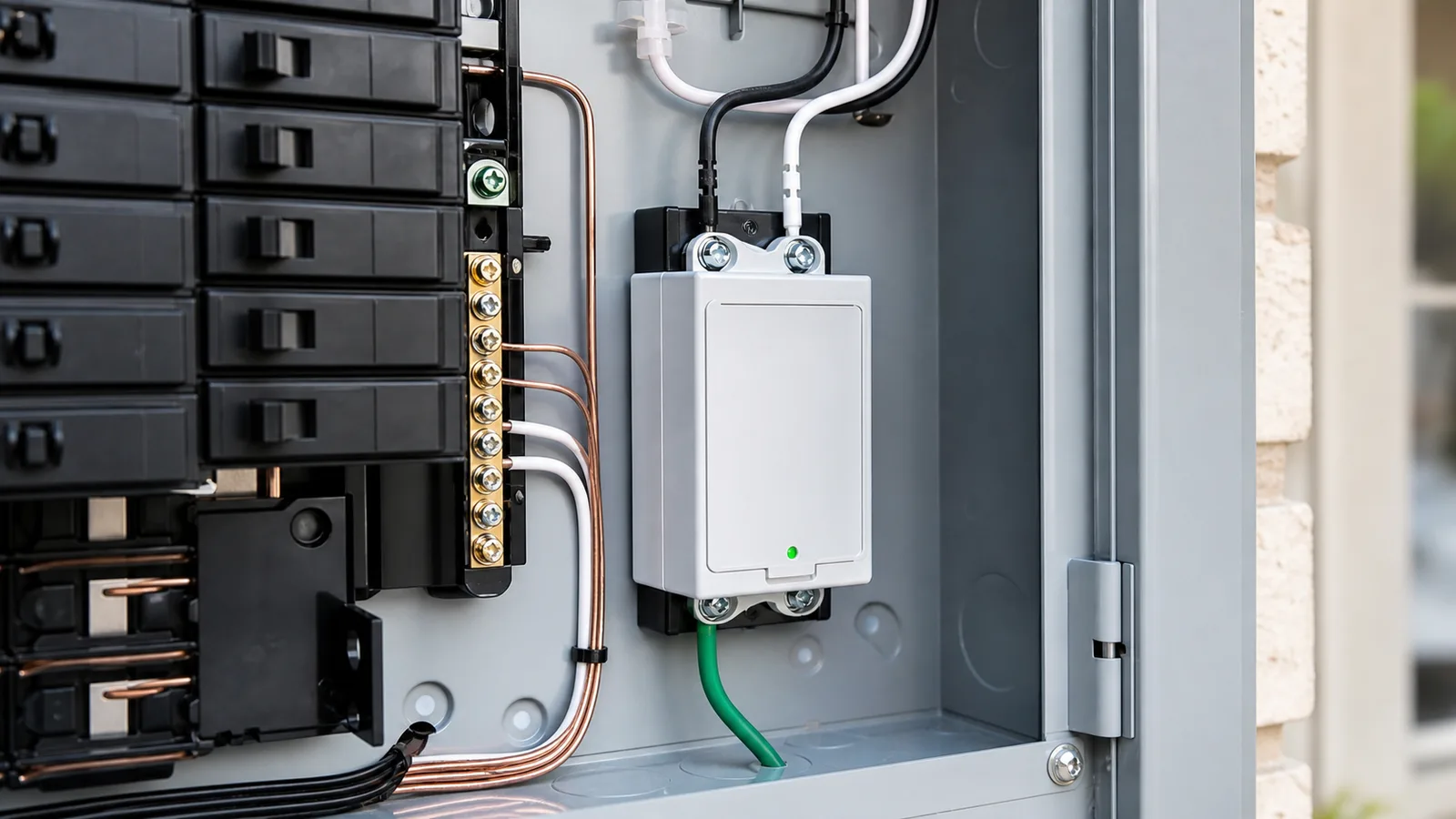
A whole-house surge protective device (SPD) is installed directly at your main electrical panel by a licensed electrician. Its job is simple but critical: when the incoming voltage suddenly spikes above safe levels, the SPD diverts that excess energy safely to ground before it can travel through your circuits and reach the devices plugged into them.
Think of it as a pressure-relief valve for electricity. Your home's wiring is designed for a steady flow. When a surge pushes far more voltage than the system expects, the SPD reacts in nanoseconds, clamping the voltage back down to a level your equipment can tolerate.
The Threat Isn't Just Lightning
Ask most people about surges and they picture a summer thunderstorm. Lightning is real and destructive, but it accounts for a surprisingly small share of the surge activity in a typical home. The bigger, quieter threat comes from inside your own walls.
- Internal load switching: Large motorized appliances — air conditioners, refrigerators, well pumps, HVAC systems — create small voltage spikes every time they cycle on and off. These happen dozens of times a day.
- Utility grid events: Power restoration after an outage, grid switching, and downed lines can all send surges down the service line into your home.
- Lightning-induced surges: Even a strike a mile away can couple energy onto nearby power and cable lines.
Individually, the small internal surges are minor. Cumulatively, they wear down the sensitive electronics in everything from your refrigerator's control board to your smart thermostat, slowly shortening their lifespan long before you notice a problem.
Why Power Strips Aren't Enough
The plug-in surge strip behind your TV is not the same thing as whole-house protection, and understanding the difference matters.
A power strip is a point-of-use device. It only protects what is plugged directly into it, and only against smaller surges. It also does nothing for the hard-wired equipment that represents your biggest investments: your HVAC system, oven, dishwasher, garage door opener, and increasingly, EV charging equipment.
Whole-house protection works the opposite way — from the panel outward — so every circuit in the home benefits. The two approaches are complementary, not redundant. That's why electricians recommend a layered strategy: a whole-house SPD at the panel to absorb the large surges, plus quality point-of-use protectors on your most sensitive electronics for a second line of defense.
What Modern Homes Have to Lose
A generation ago, a home's electronics amounted to a television and a few appliances. Today the picture is very different, and the stakes are higher:
- Smart appliances with delicate circuit boards
- HVAC systems with electronic control panels
- Home networking, security cameras, and smart-home hubs
- EV chargers and other high-value hard-wired equipment
- Computers, entertainment systems, and everything you keep charged
Replacing any one of these after a surge costs far more than protecting all of them at once. That math is a big part of why whole-house surge protection has moved from a luxury upgrade to a standard recommendation.
Installation and Code
A whole-house SPD is wired into your main service panel and must be sized and installed to match your electrical system. This is not a DIY project — it involves working inside a live panel, and the National Electrical Code has specific requirements for how surge protective devices are installed and coordinated with your existing breakers.
A proper installation includes verifying that your panel and grounding are in good condition, because an SPD can only divert surge energy effectively if the home has a solid path to ground. A licensed electrician will inspect all of this as part of the job — which often surfaces other small issues worth addressing while the panel is open.
The 2020 and later editions of the National Electrical Code (NFPA 70, NEC 230.67) require surge protection for dwelling-unit services when a panel is installed or replaced, and surge protective devices are classified by type under NEMA and UL 1449 standards. We install to code and select the device type that matches your service.
Is It Worth It?
For most homeowners, the answer comes down to a simple comparison. A whole-house surge protector is a one-time investment installed in a couple of hours. Set that against the cost of replacing an HVAC control board, a smart oven, or a home full of electronics after a single bad event — plus the years of quiet wear that internal surges inflict on everything else — and the value becomes clear.
It is one of the few electrical upgrades that protects the entire home at once, works automatically, and asks nothing of you after it's installed. The quiet guardian, doing its job so you never have to think about it.
Talk to a Licensed Electrician
If you're considering whole-house surge protection for your home, XDS Electric can evaluate your panel, recommend the right device for your system, and install it to code. Learn more on our whole-house surge protection service page, or reach out to schedule an assessment — we're happy to answer your questions and help you protect what matters.
Ready to protect your home?
Request a surge-protection assessment and we'll evaluate your panel and grounding and recommend the right device for your system.
About the author: Scott Whitlock is the owner of XDS Electric LLC, a licensed Missouri electrical contractor serving the greater Kansas City area. XDS Electric holds an official Missouri state electrical license and specializes in residential panel work, surge protection, and EV charging installations.