Lightning Strikes and Transformer Failures: How to Protect Your Home's Electrical System
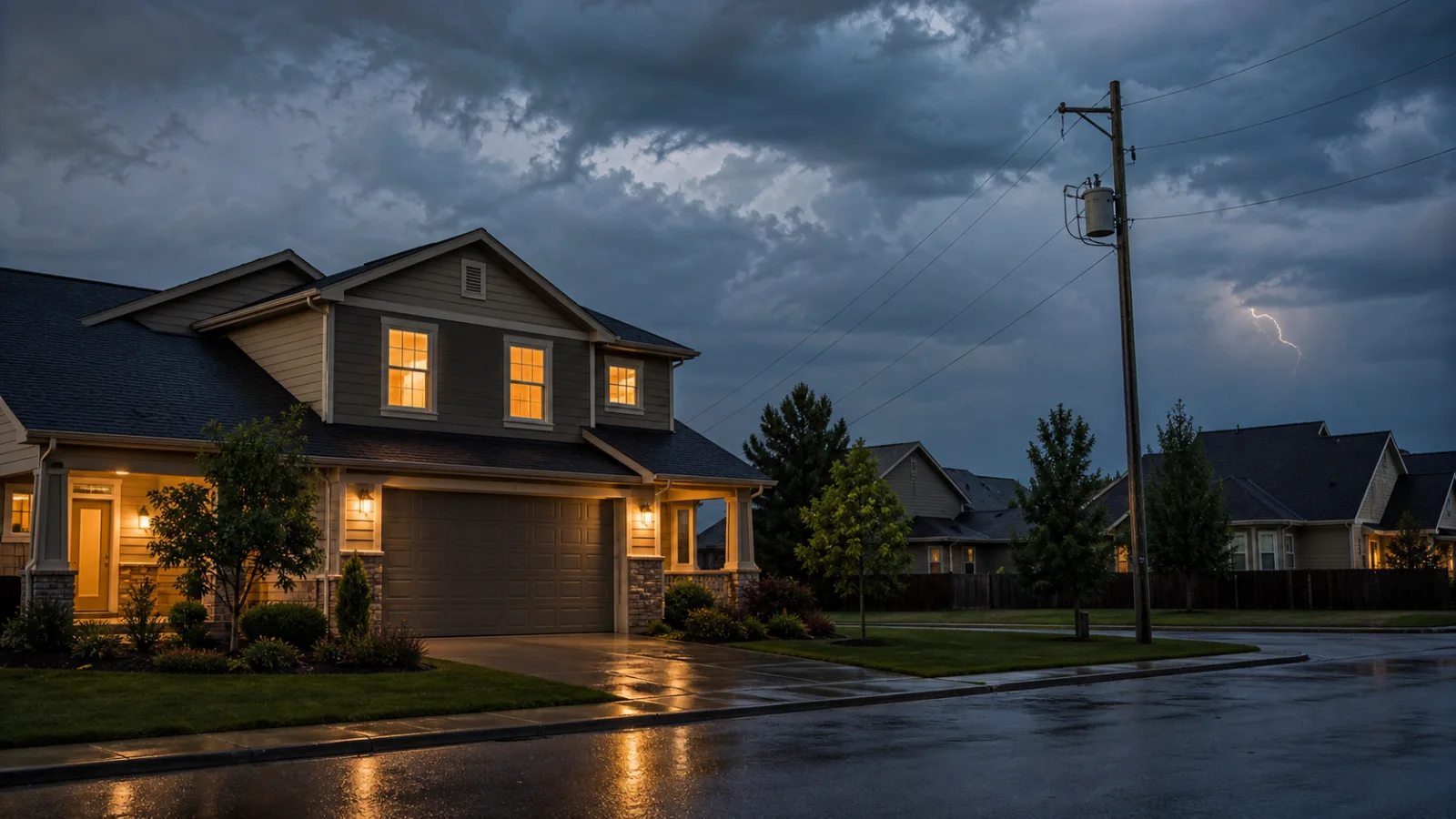
Anyone who has lived through a Kansas City thunderstorm knows the sound. You see a bright flash, hear a sharp crack, and then a loud boom comes from a utility pole. The lights flicker, get unusually bright, or go dark. Most people describe it as a transformer blowing up and sending a rush of voltage through the neighborhood.
Sometimes that description is close. Other times, the flash came from utility equipment or a protective device isolating a fault. From inside your home, you usually cannot know exactly what happened. What matters is that your electrical system may experience an outage, a voltage fluctuation, a transient surge, or another abnormal condition.
The right response is simple: protect people first, then protect the electrical system. A layered plan can reduce the chance of damage to appliances, electronics, HVAC controls, and other equipment.
What Can Reach Your Home?
Lightning does not have to strike your roof to cause damage. The National Weather Service explains that it can enter through electrical, telephone, plumbing, and reception systems.
A nearby utility failure may cause an outage, flickering lights, or voltage that is temporarily too high or too low. Power restoration and utility switching can also produce brief spikes. Utility guidance recommends turning off or disconnecting electronics when it can be done safely because power may return with momentary surges.
The phrase "inrush of voltage" is understandable, but voltage surge, voltage spike, or transient overvoltage is more accurate. Inrush usually describes current drawn when equipment starts. A transient surge is a rapid voltage increase that can stress sensitive electronics.
An outage is not automatically a surge, and not every transformer failure damages nearby homes. Some failures can produce abnormal voltage that lasts longer than a transient. An SPD is designed for short transients, not every sustained voltage problem.
Before the Storm: Build Layers of Protection
The best time to protect your electrical system is before thunder is overhead or utility equipment fails. At XDS Electric, we look at surge protection as a layered system. One device should not be expected to handle every possible path or electrical condition.
- Have the service equipment, grounding, and bonding inspected. A licensed electrician can check for damage, improper connections, corrosion, and other problems.
- Install a properly selected whole-house surge protective device. A listed Type 1 or Type 2 SPD can limit transient voltage. Selection and installation depend on the service equipment and panel, so this is not a homeowner project.
- Use quality point-of-use protection. Surge-protective strips add another layer for sensitive devices. They support whole-house protection rather than replacing it.
- Remember other incoming paths. Cable, antenna, telephone, and data lines can carry damaging energy and may need coordinated protection.
- Use a UPS for the right purpose. A UPS can provide brief backup power or allow an orderly shutdown. It does not replace whole-house surge protection.
- Unplug sensitive equipment only before the storm arrives. Disconnect selected electronics while conditions are safe, not after thunder starts.
For more detail about panel-mounted protection, read The Quiet Guardian: Why Homeowners Are Turning to Whole-House Surge Protection (https://xdselectric.com/blog/the-quiet-guardian-why-homeowners-are-turning-to-whole-house-surge-protection).
During Lightning or a Utility Event: Put Safety First
If you hear thunder, move inside a substantial building and avoid contact with plugged-in electrical equipment, cords, plumbing, and panel equipment. Do not start unplugging devices during the storm. The National Weather Service warns that touching a cord during a thunderstorm can expose you to lightning traveling through the electrical system.
If you see a transformer flash, damaged utility equipment, or a downed line, stay far away. Assume every downed line and anything it touches may be energized. Report the problem to the electric utility. Call 911 if there is fire, smoke, active arcing, a downed line creating an immediate hazard, or any threat to life or property.
During an outage, avoid repeatedly switching appliances or breakers. If the storm has passed and it is safe, leave sensitive electronics and large appliances off until utility power is stable. Follow utility and emergency instructions.
After Power Returns: Watch for Warning Signs
Wait until the storm has passed before approaching cords or electrical equipment. The National Weather Service recommends remaining in safe shelter for at least 30 minutes after the last sound of thunder.
Once conditions are safe, look and listen without opening electrical equipment. Contact the utility and a licensed electrician if you notice:
- Burning odors, smoke, scorch marks, or melted plugs
- Buzzing, sizzling, or crackling sounds
- Breakers that are tripped or continue tripping
- Lights that are unusually bright, unusually dim, or changing between the two
- Appliances, HVAC equipment, chargers, or electronics behaving abnormally
- Visible damage near the meter, service mast, panel, exterior wiring, cable, or data entry points
- A whole-house SPD indicator showing that protection is no longer active
Bright lights in one area and dim lights in another can indicate a serious service problem. Stop using affected equipment if safe, contact the utility promptly, and arrange an inspection. Never remove the panel cover or diagnose service wiring yourself.
What Surge Protection Can and Cannot Do
An SPD limits transient voltage by diverting or limiting surge current. It reduces risk but does not make a home immune to every event.
No ordinary SPD can guarantee that equipment will survive a direct lightning strike. It cannot repair damaged wiring, correct a loose connection, replace proper grounding and bonding, or control every sustained overvoltage. A complete lightning protection system is a separate engineered system that may include air terminals, conductors, bonding, grounding, and protection for incoming services. UL Solutions explains these systems and their component standards.
The strongest approach is practical and layered: sound service equipment, proper grounding and bonding, whole-house surge protection, point-of-use protection for sensitive electronics, and protection for other incoming lines where appropriate.
Protect Your Home Before the Next Event
You cannot control where lightning strikes or when utility equipment fails, but you can prepare before it happens. If you are not sure what protection your home already has, we can look at it before the next storm. XDS Electric can inspect your panel, grounding and bonding, evaluate your current protection, and tell you what your home needs and what it does not.
Learn more about our whole-house surge protection service (https://xdselectric.com/services/whole-house-surge-protection), request an assessment (https://xdselectric.com/contact), or call 913-230-2571. We will evaluate the system and recommend the right next step for your Kansas City area home.
About the author: Scott Whitlock is the owner of XDS Electric LLC, a licensed Missouri electrical contractor serving the greater Kansas City area. XDS Electric specializes in residential panel work, surge protection, and EV charging installations.
Safety References
- National Weather Service: Lightning Indoors: https://www.weather.gov/safety/lightning-indoors
- UL Solutions: Lightning Protection Application Guide: https://www.ul.com/thecodeauthority/knowledge/lightning-protection-application-guide
- PG&E: Tips to Prepare for a Power Outage: https://www.pge.com/en/newsroom/safety-action-center/emergency-preparedness/tips-to-prepare-for-a-power-outage.html